Overview
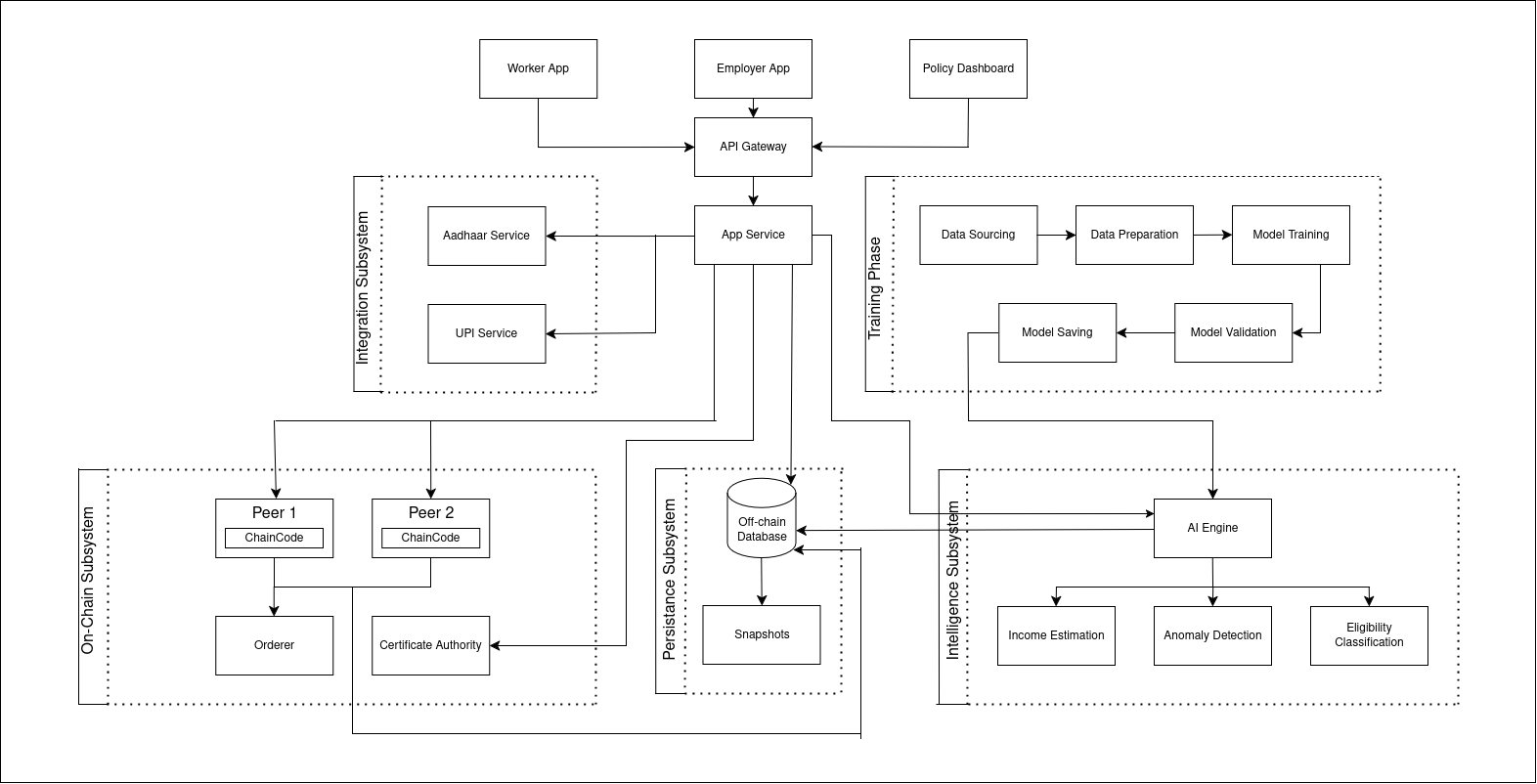
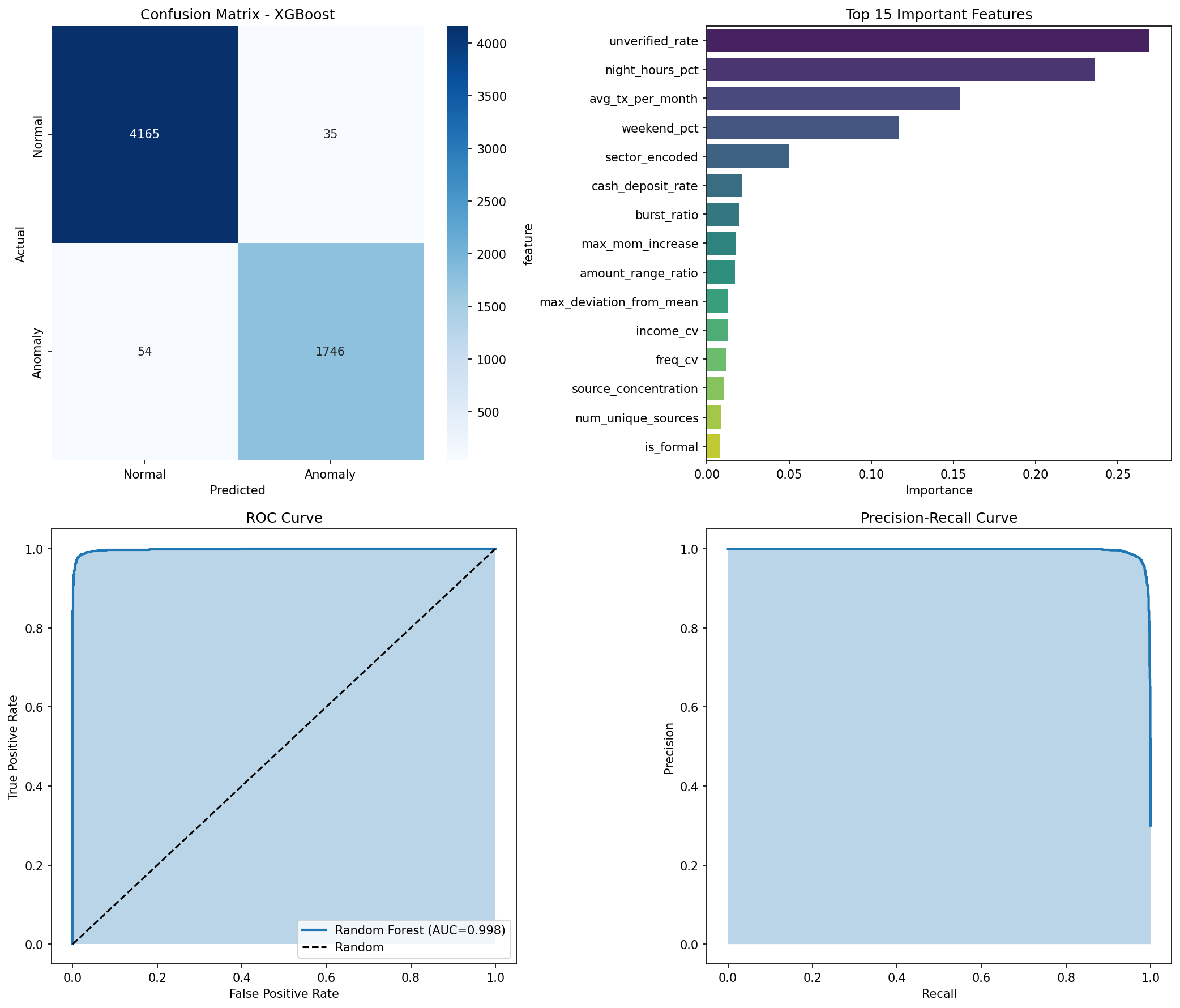
TRACIENT is a blockchain-based income traceability system for equitable welfare distribution. It combines a permissioned ledger with AI and machine learning to classify households, detect anomalies and make welfare verification transparent.
I contributed across the platform: payments, family records, authentication, blockchain integration, frontend cleanup, account roles, validation and the architecture documentation that ties the system together.
What I built
UPI payment module
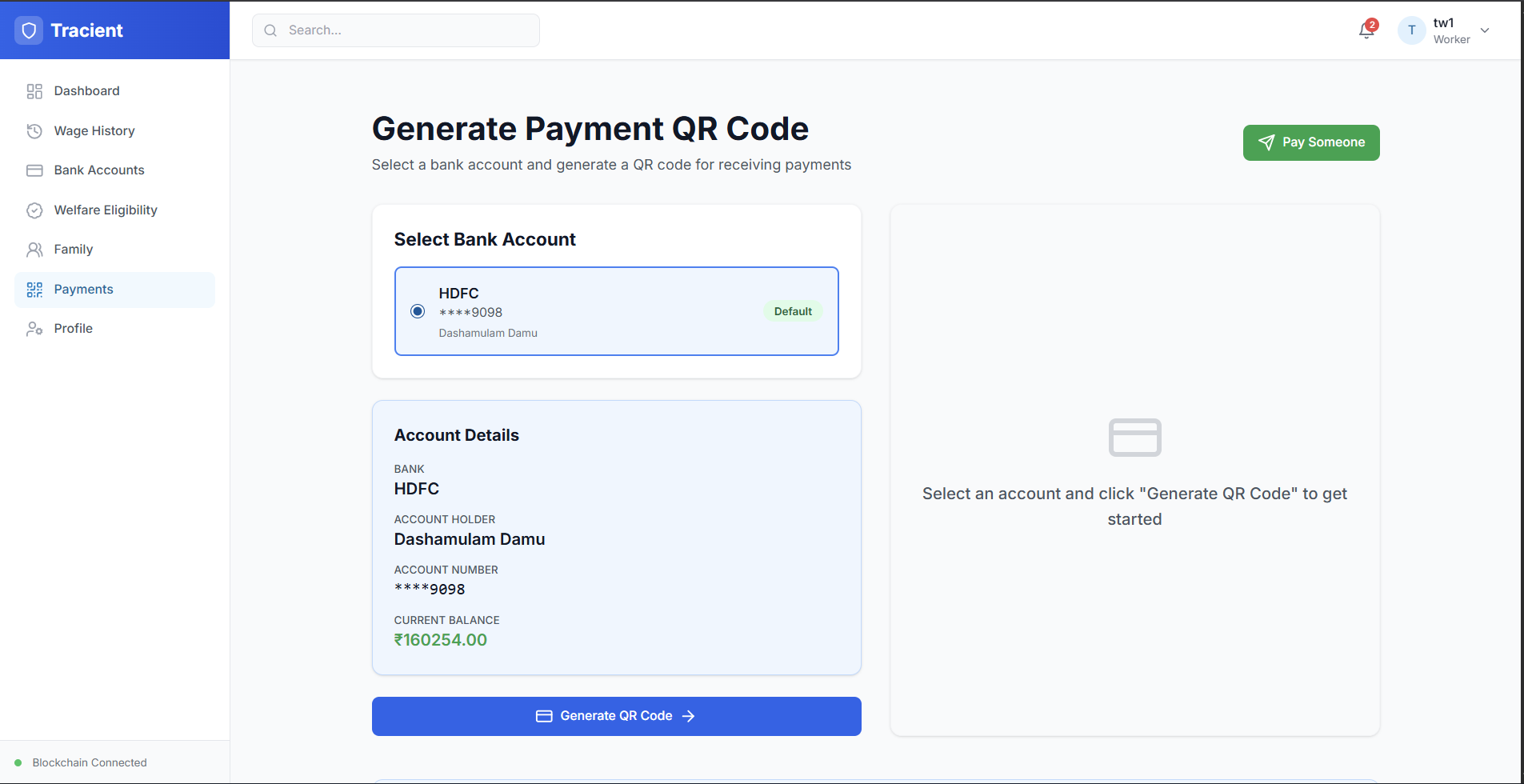
A complete UPI payment flow with QR code scanning, a mock payment implementation for development and testing, transaction recording and a clear payment interface. Every payment is recorded on the blockchain, giving the system an immutable audit trail.
Family module
Ration-card-based family tracking with automatic profile updates, real-time synchronisation with user-defined parameters and data management designed for household-level welfare monitoring.
Authentication
User authentication and authorisation, secure credential handling, session management and integration across the frontend and backend.
Blockchain and backend integration
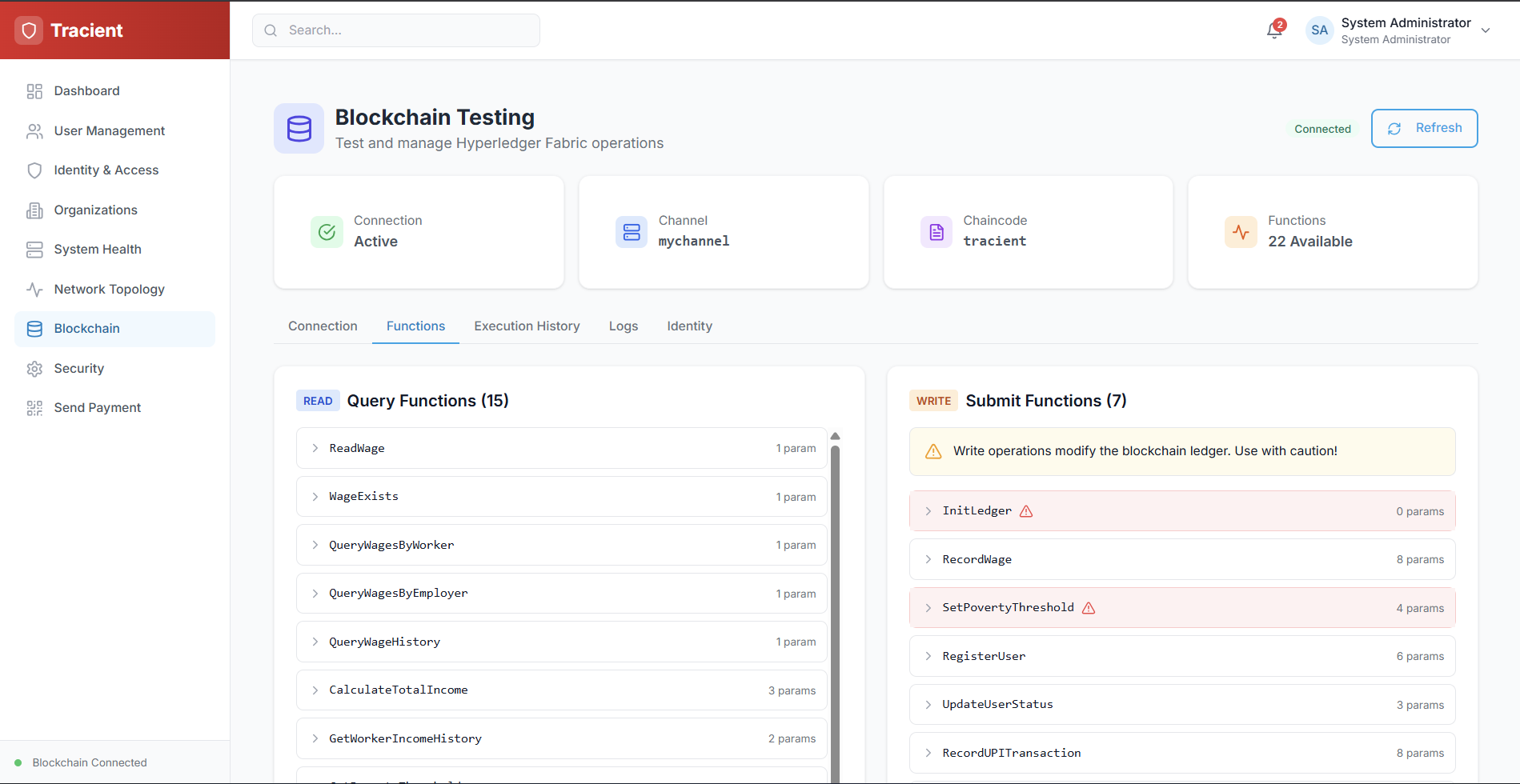
I completed the connection between the backend and the blockchain network and removed its dependence on environment-specific system variables. The integration now uses standardised configuration, which makes the system portable across environments.
Worker and employer accounts
Users can switch between worker and employer roles based on their needs. The transition is verified, role-based and tracked over time, so the system preserves account history and integrity while supporting different workflows.
Input validation and frontend cleanup
Validation covers required fields, data types, formats, cross-field dependencies, business rules and malicious input. On the frontend I repaired broken navigation and resources, removed unused components and dependencies and improved consistency and performance.
Platform views

Architecture
The system is documented with an architecture diagram and an entity-relationship diagram covering entities, relationships, dependencies and data structure. That documentation provides a reference for future development and maintenance.