Overview
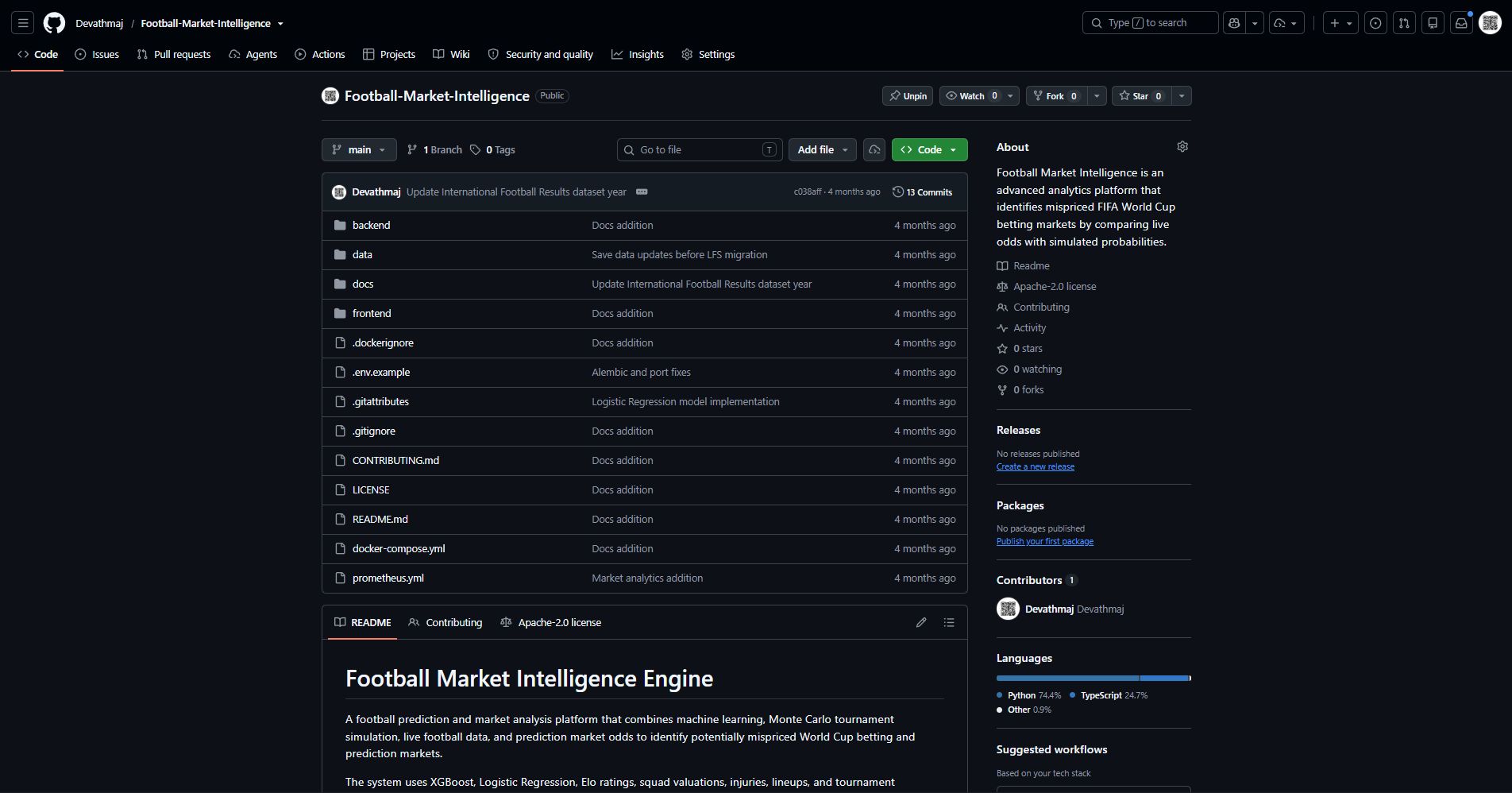
Football Market Intelligence is a prediction and market analysis platform for international football. It compares bookmaker and prediction-market odds against proprietary probability models to surface markets that look mispriced.
The system behaves like an automated quantitative analyst. It ingests historical results and live football data, engineers features such as Elo ratings, rest days, travel distance, squad value and head-to-head history, trains models to estimate match outcomes, simulates entire tournaments and evaluates the resulting probabilities against market prices.
How the engine works
The pipeline runs in stages, with each stage writing to its own PostgreSQL schema.
- Ingestion. Historical datasets and live API-Football responses are stored first in a raw schema so parsing can be re-run without spending API credits again.
- Normalisation. Teams, players, matches and match events are resolved into a clean relational core, including name mapping across data providers.
- Feature engineering. Elo ratings, rest days, travel, squad market value and head-to-head records are computed into a wide match-features table using only information available before kickoff.
- Prediction. XGBoost estimates home, draw and away probabilities, while logistic regression provides an interpretable baseline and anomaly check.
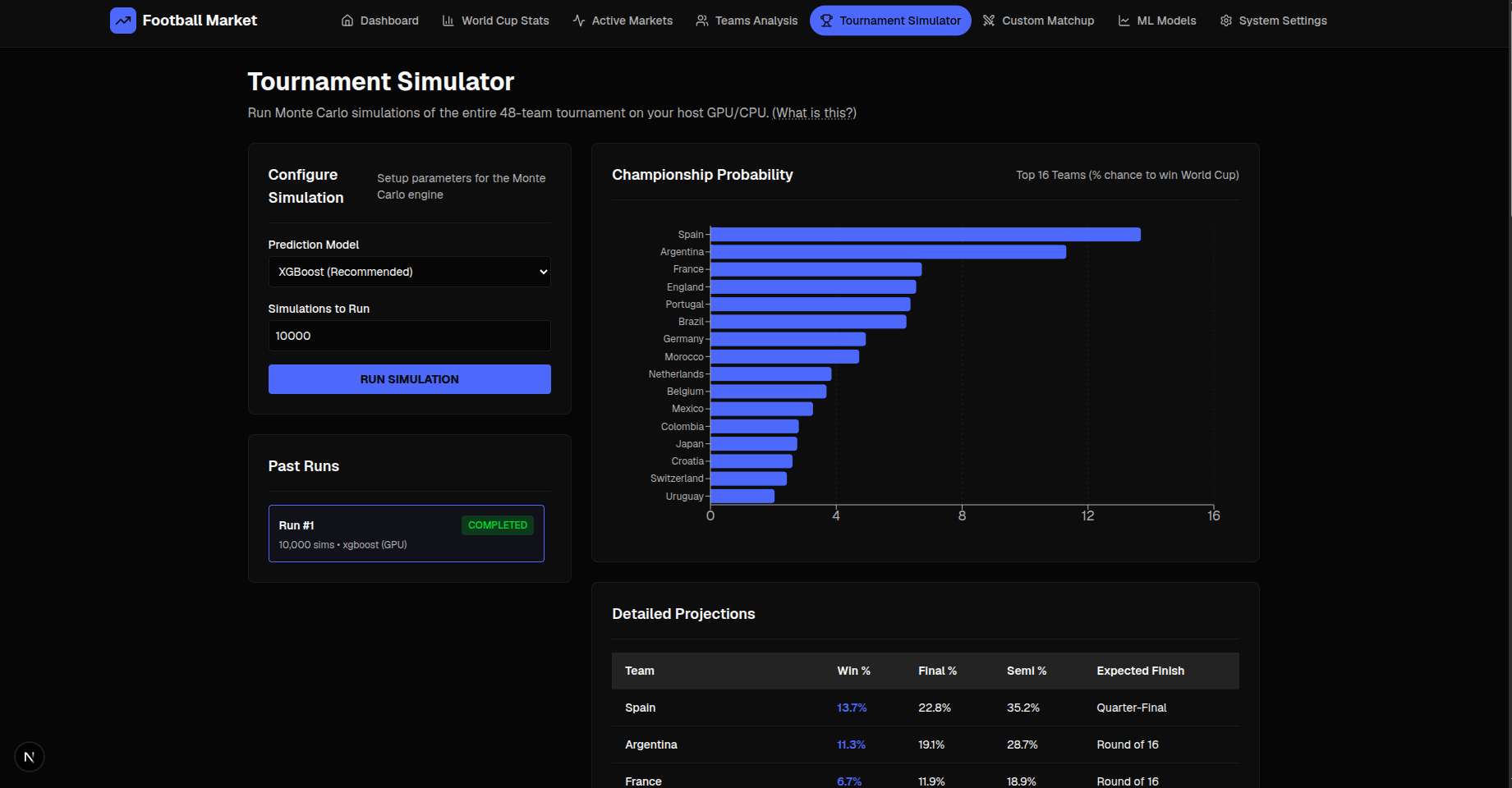
- Simulation. Monte Carlo runs of the full tournament structure update the probability of every team reaching every stage, including extra time and penalty shootouts.
- Evaluation. Model probabilities are compared with current market odds. When the model’s implied probability exceeds the bookmaker’s by a configurable margin, the opportunity is recorded.
Risk filters exclude illiquid bookmakers, volatile markets and excessive exposure so the output is not just a list of mathematically positive bets.
Product tour
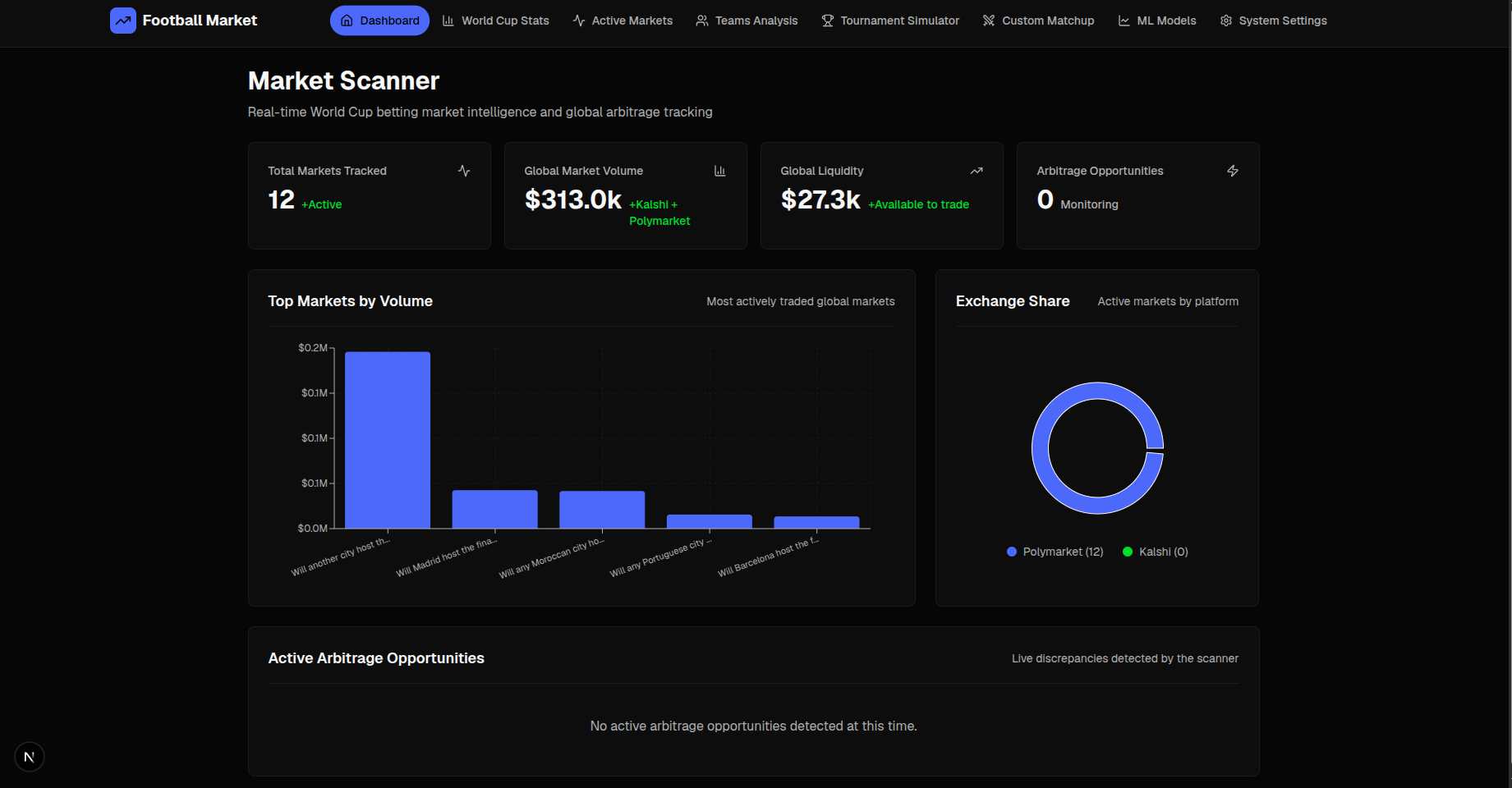
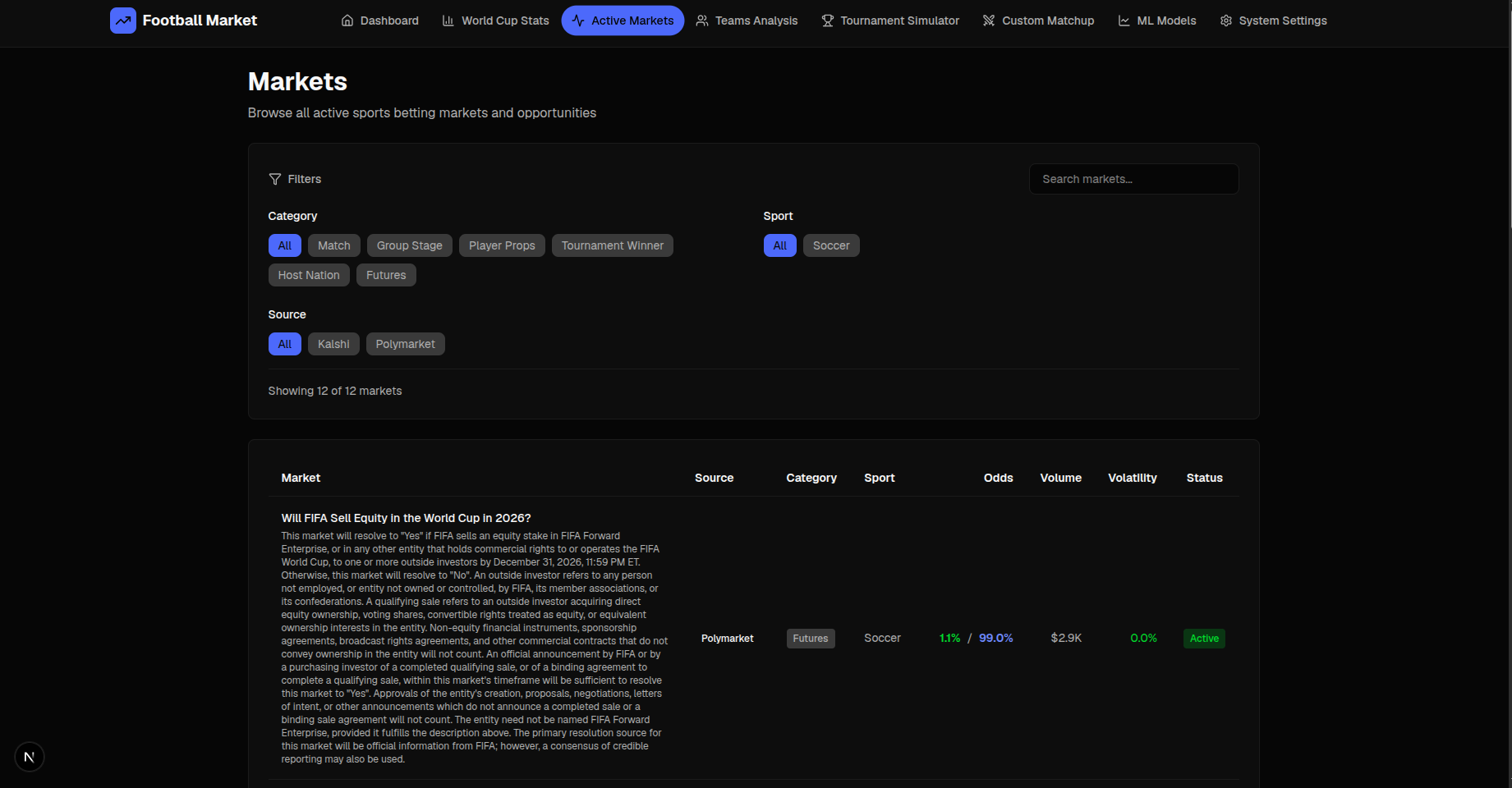
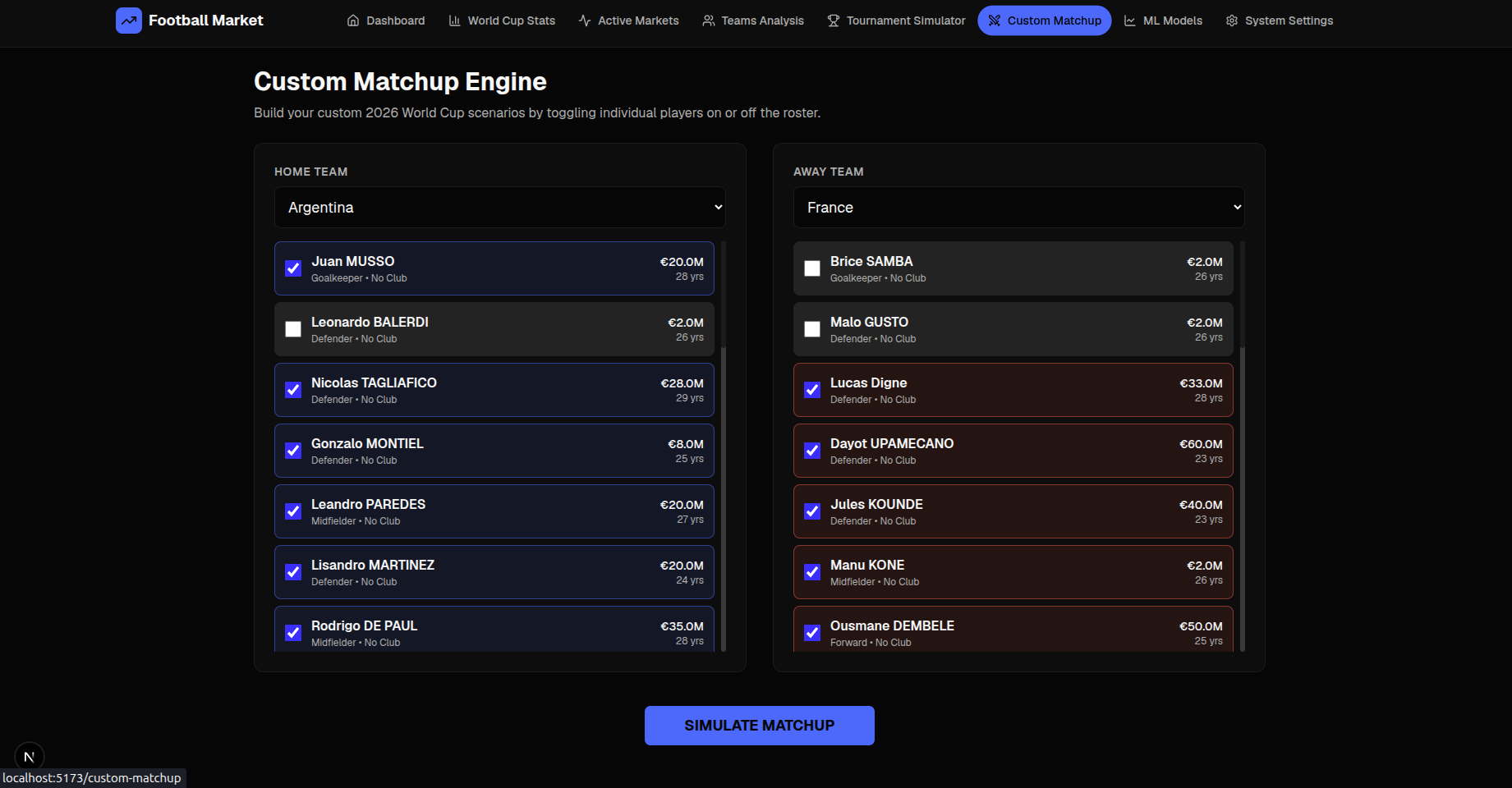
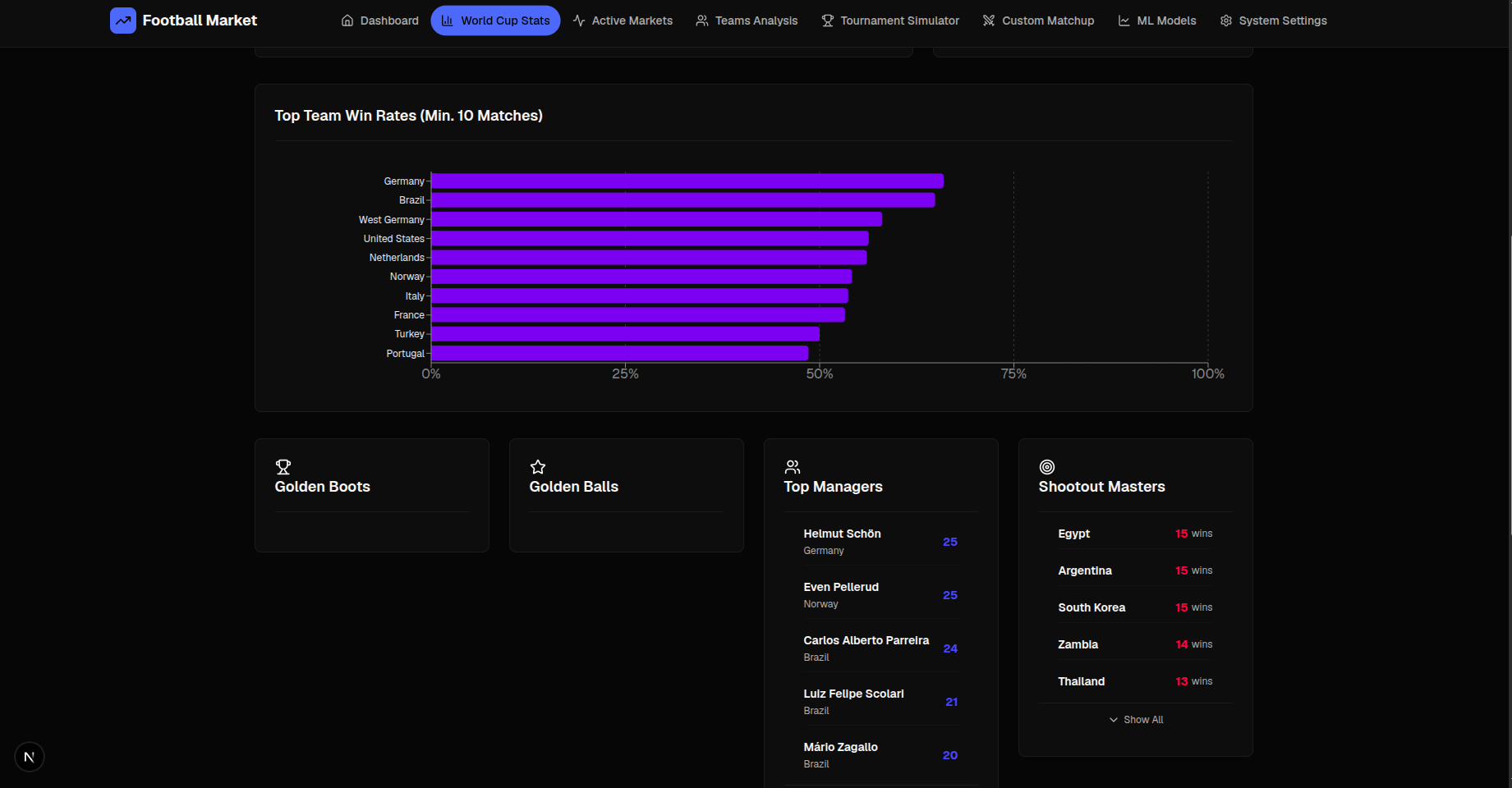
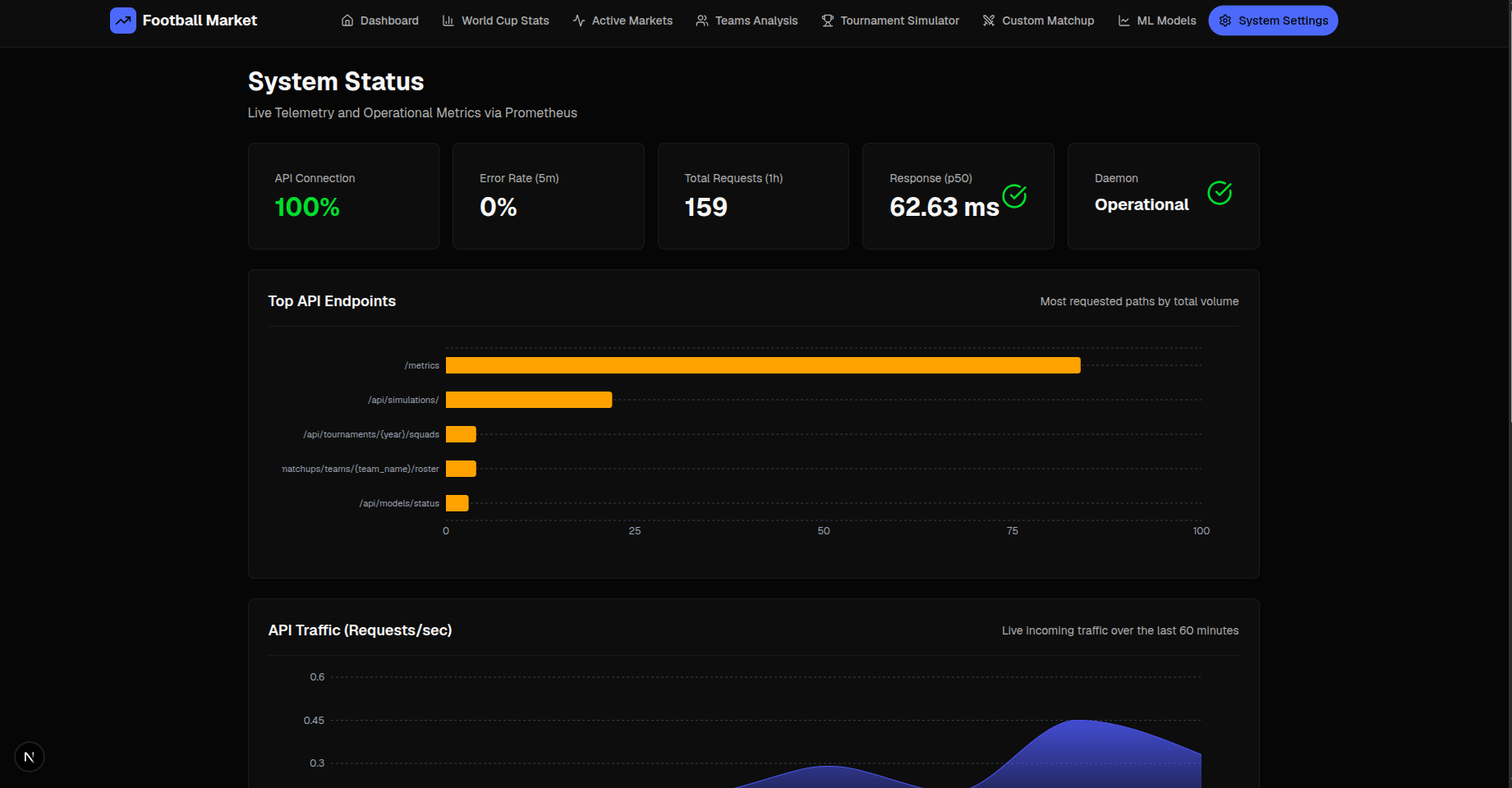
The frontend is a Next.js dashboard for analysts, with views for upcoming matches, model probabilities, live opportunities, tournament simulation and historical performance.
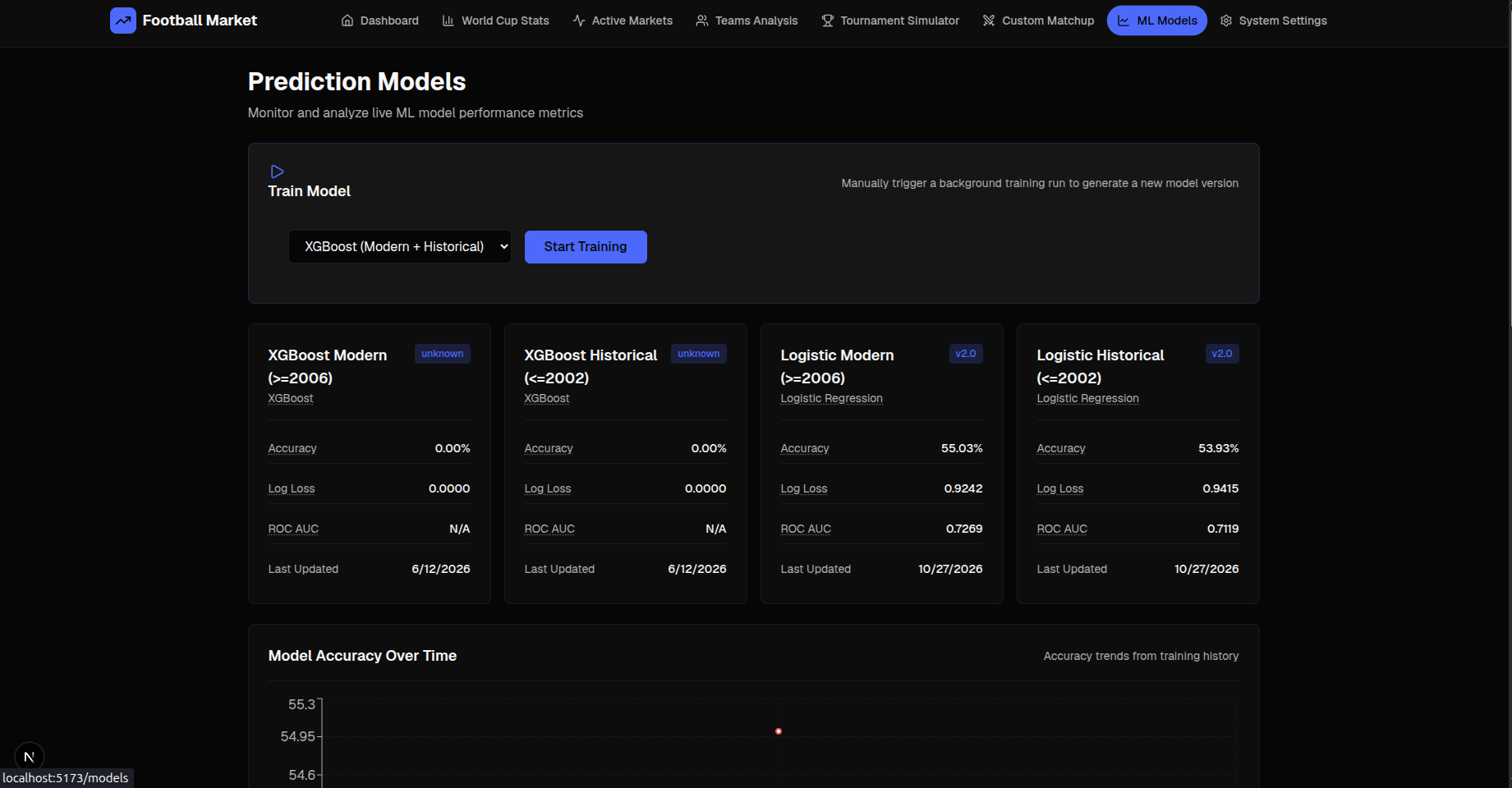
Data and modelling notes
The platform maintains a clear separation between raw provider payloads, normalised domain data, computed features, model outputs, market odds and actionable opportunities. Alembic migrations version the database schema and a cold-start path bootstraps an empty database by ingesting history, building features and training the first model before the API begins serving requests.
Background pollers keep fixtures, lineups, injuries and odds current. A completed match can trigger a fresh tournament simulation, which quickly updates futures probabilities before bookmakers fully adjust.